
When Creating the Characters is the Story
I know a particular frustration that arises when your story is complete in your mind – the plot, the tone, the emotional resonance, everything – and then you are stymied by how you are going to draw it all. The story needs faces. It needs characters that are somehow external to your own mind, in a place where others can see them, respond to them, and understand them even before they start speaking. A character anime maker has become the bridge to that gap, and it’s more than one might think. Because, when you have a character, the story often clarifies like nothing else.
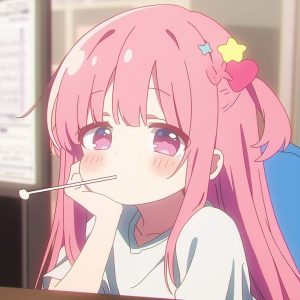
This is no trifling thing. Visual character work affects storytelling. It has always – that’s why professional authors have used reference images, or character sketches, for as long as they’ve been around. The only thing that’s changed is that the reference image can be your character’s face, rather than something else’s.
Every Creative Person Has Ideas
All artists have ideas. Lots of them, probably hundreds over the course of a lifetime – half-formed characters, glimmers of plots, intriguing personalities described in a couple of sentences in a note-taking program and never revisited. Most ideas stay ideas. Those that become projects have a tendency to be the ones that got specific. Visual specificity is one of the surest ways of getting there. When you can see your character – when they have a face, a pose, a look in their eyes, an aesthetic that is unique to them – then the idea is suddenly real and you have to answer to it.
AI anime art tools speed up this process because it doesn’t require skill to use. You don’t have to be able to draw. You do need to know how to envision your character, which is a completely different skillset, and easier. The program translates words into pictures. You provide the vision.
What a Character Maker Should Do
Since we’re talking about a “maker”, it’s worth considering the amount of craft control it offers. Some tools are better than others at this. We make a distinction between using a character maker that gives you something bland and one that gives you something interesting because of how much intent you can pass into the tool. Older tools were based on dropdowns, which couldn’t receive much – they had their own built-in vocabularies and your intent had to fit within those vocabularies.
AI anime art generators are different because they can receive natural language. Natural language is extremely information-rich. The description “a character who looks like she’s been carrying something heavy for a long time and has gotten very good at pretending she isn’t” is not an option in a drop-down menu. But it is a perfectly understandable visual prompt that a suitably trained AI can respond to by making a face, holding a pose, communicating an attitude. That sort of translation fidelity – how well the tool can receive your communication – is the difference between a character maker that’s truly helpful and one that makes you bend over backwards.
Visual Stories Need Visual Coherence
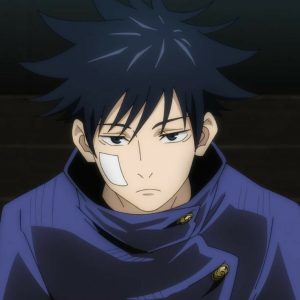
One thing that’s important to the success of any character-making tool or story is visual coherence. It’s possible to have beautiful images of individual characters, but they may not be good as a group for a story. If characters are all drawn in a different visual aesthetic – one in pastels, one in bold lines, one in an illustrative style – it creates a disjointed visual narrative, even if there is a coherent story. Visual consistency is worldbuilding for the reader or viewer. When they all look like they’re from the same place, it tells the reader that they are from the same world.
When generating AI anime art, you can control this factor. If you define an aesthetic framework for the project at hand (a certain color temperature, a certain logic for the lighting, a certain emotional tone for the visual style), and you describe that aesthetic framework in your prompts, you get characters that feel congruent. Characters created within the same aesthetic framework feel like they’re from the same series. This isn’t an effortless outcome, but it is possible through prompting and the benefit of a unified project is enormous.
The Character Who Teaches You the Story
There’s an under-acknowledged thing that happens when you work on designing characters: the characters sometimes teach you a story you didn’t know before. You’re coming up with a visual for what you think is a secondary character, and there’s something about how they look – the particular facial expression that came up from the prompt, the particular colours that came up, the particular pose that came up – that turns you around and you go back to the story and you think, oh, this is who this person is. An aspect of the story that hadn’t come through in the text came through in the image.
This is not a magical process. It’s simply how creative processes work. Writing generates certain kinds of discovery. Visual work produces others. If you use both at the same time, you get insights from each form of production. When you use an AI character maker to create anime as part of your work process, rather than at the end, you introduce this dynamic earlier on – where it can have an effect, before the story has become so set that it can’t be changed to incorporate new insights about its characters.
From the Tool to the Story
Let’s be clear. AI anime art tools, no matter how good, are tools. The story isn’t in the tool. It lives in the artist – in the decisions they make about who these characters are, what they want, what obstacles they must overcome, what they’ve experienced that nobody knows about. The tool makes a face. You choose what it has experienced.
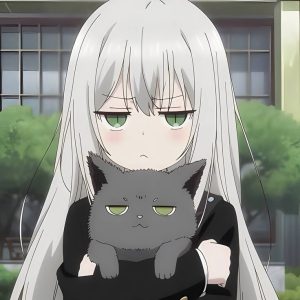
The works that are created when this combination takes place (intentional creative practice and skilled generative tools) have a quality the individual parts do not. The visual work is grounded by the story. The visuals are focused by the story. Each raises the other. And it’s all quicker than if you were having to wait on technical know-how or commissions to come good. That’s not shaving time. It’s about using your creative energy to make the decisions that you should make – and letting the tool make the rest.