
Artwork Tools Online Made the Difference – Here’s How to Use It
There’s a certain kind of magic in seeing your imagined character become a reality, and there’s nothing like the feeling of creating a character that feels like your own creation. Not close enough, not “good enough”, but exactly like the character you’ve been imagining for months. The anime characters creator online tools have made that experience possible for people who don’t consider themselves to be artists and the characters we’re seeing in communities online are pretty cool. the feeling of creating a character The quality ceiling didn’t. The quality ceiling didn’t.
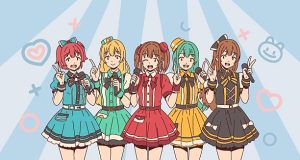
Custom anime art is the key to this change because it provides something template tools can’t produce organically – uniqueness. A happy character design isn’t simply one with a smiley face and rainbow hair. It has texture. It has context. There’s a reason why this character is glowing and the design tells you that reason without needing to read any text.
Joyful Design Is a Technique, Not a Mood
“Joyful” is often used as a command that a tool or artist will return when you program a tool or artist. It doesn’t work that way. Creating a joyful character is made from decisions – the shape of a mouth about to speak something exciting, the tone of the skin that makes it look like the character is always in a sunny spot, the softness of the outline that makes it seem like they’re open to the world. These aren’t accidents. They’re choices made one by one, and online expression tools offer more choices than ever.
The right tools – the ones that are worth it – let you tune expression mechanics, not just select from a list of emotions. You can set the shape of eyes and brows and lips separately to get an expression that makes sense for the character. tune expression mechanics This sort of control is what makes a creator tool different from a costume generator, and it makes all the difference in the world.
How to Tell if a Creator is Right for You
Not all web-based character creators are created equal. Some are pretty and shallow – lots of choices that don’t add up to much variety. Some are really rich, and support the kind of layering that leads to characters that feel like real people. It’s helpful to know this before investing time in a tool.
Layering is typically the biggest giveaway. Can you layer clothes, accessories, hair and expressions separately to change them independently? Or do you have to reset other things when you change one? Separate layers allow you to try all the things without losing any of the things you liked. It’s a way to change your hair without resetting your colour scheme. That might seem an insignificant point until you’ve spent 40 minutes designing a character and a tool makes it impossible to change a part of it without changing the whole thing.
Asset variety is important but volume is not variety. If a tool has five hundred different hairstyles, and all those hair options are basically the same, you’re not getting five hundred options, just a single option with minor variations. Variety means different proportion styles, different cultural and aesthetic inspirations in the clothes and accessories, different types of eyes that convey different emotions and thoughts. Anime art needs this sort of variety because all the other important elements of character design follow from it.
Where Online Tools Turn You Into An Artist
There’s a stark reality about creator tools that they don’t talk about: there’s an upper bound to what you can do with a template-based system, and you hit it sooner than you think. The ceiling isn’t a quality ceiling – tools can make gorgeous things. It’s about originality. After a while, all characters made with the same tool look related. The proportions are the same. They have the same range of expressions. The style is stamped with the origin of the design.
That’s the place for art commissions. The leap from the tool to the artist isn’t a rejection of digitally-made art, it’s an enhancement. You show up to the table with all of the things you’ve learned from the tool: the direction of the colours, the general shape of the character, some personality quirks, the pose that’s closest to the right expression but not quite there. The artist uses that as a starting point to make something unique to your character. No platform fingerprints. No asset library. Only a design you could get from here.
Experienced practitioners use both. The tool is for experimenting and prototyping – cheap, fast, easy. The commission is for the final product that must be taken seriously. It’s wrong to pit them against each other. They’re different phases of the process.
Characters With Joy Work Across Communities
This is all about social, too. Characters designed with joy in mind tend to be trans-ferred. They get fanart. They are alluded to and repackaged and placed in contexts their makers didn’t anticipate. This is because the joy of designing characters is infectious, in a way that’s hard to fake and easy to spot. People sense when someone has had fun creating something, and they want to share the fun.
This is especially the case in anime art circles, where a love of the craft is deeply ingrained and where it can be seen from 100 paces. A character that’s been lovingly crafted, whose skin color was carefully considered, whose pose was thought through and revised to evoke the right mood, whose details are so much fun to examine, like hidden Easter eggs – that character is treated differently than one thrown together in fifteen minutes from the default settings. a love of the craft Both could technically be anime characters. Only one becomes a fan’s favorite.
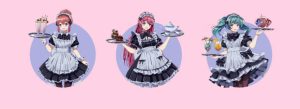
The lesson for anyone who uses computer tools to develop characters is to spend longer than you think you should. The first iteration that looks good isn’t always the place to stop. Push into revision. Make a change you feel sure about. The character who makes you say “wait, actually, yes – that’s right!” always comes a few revisions later than your first thought of “ok, I think I’ve got it”.