
It is strangely magnetic in terms of first encountering an ai artwork anime, almost like staring at a dream yet to be fully formed. It appears smooth, even overly smooth, as though it passed right over the dishevelly stage in which personality is generally made. It is at that point that the actual business of custom anime art begins to weave its magic of transforming something generic into something that seems to have been lived in, and they might be unforgettable in a few seconds, but they seldom remain so long because they do not have such unconscious human fingerprints. After starting to adjust, tweak and push details, the image begins to have some weight, a story hidden in the background. It is the contrast between something on a wall and a picture in your house that you refuse to remove.
Where Personal Touch Counts
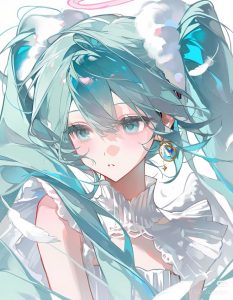
Minor details have more emotional context than most of the individuals anticipate, and it is at this point that customization is strong. Even a small scar, a slight tilt of the head or even the wrong fit of the sleeve will point to a whole back story without uttering a single word. AI can randomly mix these things, however, randomness does not often arrive where it is intended and it is the intention that makes people care. Once you intervene and control those details, the art begins to feel imposed as opposed to naturally created. It is a kind of an autopilot to manual control switch as each and every decision counts. It is no longer a process of creating images but creating meaning in a way that seems purposeful and intimate.
The Hidden Art of the Unfinished
It is common to see perfect images and feel like they are distant and behind the glass so that you can observe but not touch it. Custom anime art goes in the contrary direction of this by accepting minor flaws that make the work seem human. The touch of an uneven line or of unlightened light will add coziness which an untroubled symmetry may frequently be deprived of. The audience relates with flaws as it is a reflection of real life where nothing works out just as it ought to work out. Even that slight imbalance can make a character more realistic, as though he or she can walk out of the frame at any moment. Irony is that by going away from perfection, we bring the art nearer to something, a truth.
Style is Not Just Beauty, It is Personality
Style is a decisive factor that predetermines the perception of the character before the story is told, and that is the reason why style is one of the key choices in the style of custom anime art. AI has the ability to cross styles in a matter of seconds, yet without guidance, the output tends to be homogenous and unmemorable. Making a consistent visual choice brings about a sense of consistency and consistency helps in the recognition with time. With the appearance either being gentle and nostalgic or being crisp and cinematic, the decision of keeping it that way provides the piece of art with a firm identity. That identity is something that viewers can cling to, as though they are in a crowded room and can see a familiar face. The style itself becomes a part of the voice of the character as time goes on.
Emotion Over Technique
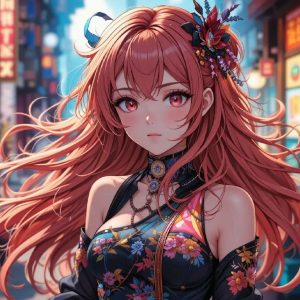
There is a possibility of a technically perfect image to be empty and this is a fact many individuals only realize after taking unnecessary time to gaze upon an image. That gap is filled with emotion, and it is this sense that makes a well-rendered character alive. Even minor variations in the expression, body language, or even lighting can alter the whole atmosphere of a composition. Even the look to the side may indicate indecisiveness and the shadow on the face can indicate conflict or profundity. These changes do not involve complicated equipment, just a good understanding of how the character is feeling. When the process is dominated by emotion, then technique will automatically follow without the domination of the outcome.
Cooperation with The Machine
When interacting with AI, one does not press a button and more of a conversation which is quiet and happens over time. You provide it guidance, it gives you answers, and then you fine tune what you get back to until you begin to get it into your vision. It is in this back-and-forth process that customization would be the most comfortable to be, since the initial output is hardly the definitive output. It is a matter of patience, trial and error and it must be accompanied with the desire to continue to tweak even when it comes down to a point that it feels fine. There is no meaning in the machine because the machine does not know meaning and each refinement you do to it is clarifying. As time goes by, the image is no longer created but directed and that difference is what counts more than most people may think.
Background Information Influences the Image
The character without the context is like a shell regardless of how eye-catching the design is. The simplest background can change the attitude to every detail, providing the sense of meaning to the decisions that would otherwise seem arbitrary. The clothes, the way he/she is drawn, the color, etc. all start to say something about the character and what he/she went through. A traveler may show signs of a weary appearance, and a strong character may stand erectly and sharply in contrast. Such choices form strata that the viewers can feel even though they are not aware of them consciously.
Making It Yours
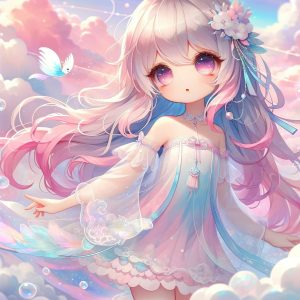
The process turns into perceiving something personal at some stage, and it is no longer involved in editing an image. It is not perfection or striving to achieve a certain ideal norm, but when the art work is right. And even that feeling of connection does not occur overnight and typically requires the process of numerous adjustments. You fiddle, and stand back and fiddle until the picture begins to seem like you want it instead of the default delivery of the machine. It is a sloppy process, but it is in that sloppy that personality is created. At some point in the process, the art ceases to be created and begins to seem part of you.