
The Face Is Where It Starts (or Stops)
The face makes or breaks a character. You can get the clothes right, the shapes right, the colours right – but if the face isn’t right, it doesn’t matter. It’s where a character announces their personality to the world even before they open their mouth. It is where emotion, personality, the way we experience the world is written on the face. That’s a lot for shapes and lines to communicate, but a good character artist knows how much time to spend on the face relative to the rest of the body. The ability to use an anime face generator through AI anime art opens up this very point of tension to those who have yet to access it – and what emerges when you get the face right is an entirely different project.
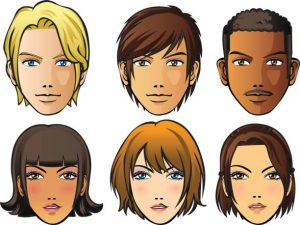
The face isn’t just aesthetics. It’s personality on the face. You have to get it right, because you don’t notice when it’s not.
The Expressive Power of Anime Faces
The style of anime made certain choices about facial representation that, taken together, have evolved into a language that is highly communicative. Eyes are large and so contain more information than naturalistic eyes do – more detail in the iris, more surface for light to play on, more space for the subtle cues that distinguish between grief and fatigue and low-key fury. Mouths are stylised to emphasise emotional expressivity. The interaction of eyebrows and eyes signals aspects of internal state that would require several paragraphs to explain in words.
It’s why anime has always been a great narrative medium for emotional complexity. The style is designed to communicate interiority. Emotional states that realistic visual styles can only imply are made clear by anime’s style. And AI art generators that have learned the grammar can reproduce it with an intentionality that’s not approximate. When you tell an AI to “look sad”, they don’t just give you a representation of “looks sad.” You’re getting something that knows the difference between the expression that comes just before tears, and the expression that comes after the tears are dried.
The Discrepancy Between What you Say and What You Mean
And here’s where we get into the meat of the question, and where most people mess up the first time around. To get a good result from an AI generator, you need to be more precise with emotions than you are when talking to other people. “Sad” is not a description. “Worn out but trying to look otherwise” is approaching. “Eyes a little cast down with the particular dullness that implies you’re thinking about something you haven’t expressed yet” is the sort of thing that can make a face distinctive. There is a vast difference between the two in what they produce.
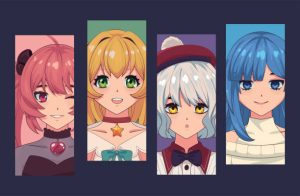
This isn’t to say the tools aren’t good. It’s a good point about prompting: you have to be more precise about emotion than you usually would be. Actors do it – they don’t just play “happy” or “angry”, they play circumstances that give rise to these feelings. It’s the same with an anime face generator. The more you can pinpoint the emotional context of the character (as opposed to the emotion itself), the more authentic the result. It’s more difficult at first. But it speeds up quickly, and it’s worth it.
What the Eyes Are Actually Doing
If you’re at all interested in using AI anime art to generate character faces, you’ll soon find yourself fixated on eyes. This is entirely normal and probably even right. An anime face is most dense in information at the eyes, and a face is also most rich in nuance at the eyes. You can have all the other features in place, but if the eyes aren’t describing anything then the face can feel empty. But when the eyes are right, they can make the rest of the face feel more real – the expression makes more sense, the character feels like they have something to think about, rather than just being onscreen.
When it comes to describing eyes, there are a number of things to keep in mind. The physical: shape, size (on the face), eyelid weight, heavy or fine lashes. The eye color, which in anime has a lot to do with personality and emotional connotation (cool blues, warm ambers, dark purples, pale greens, highly saturated or washed out, and so on). And the nature of the gaze itself: in focus or out of focus, looking down or looking directly at you, with a certain quality of light or none at all. Each of which yields different results. Each says something about the person you’re portraying.
Expression is not Decoration
This is perhaps the most important thing to keep in mind when you want to design characters through AI anime art: expressions aren’t decoration. It’s not a garnish that comes at the end of the character design process. It’s character work and as such it affects everything about how you generate characters. A character who has a neutral expression (by neutral I mean their natural expression in the absence of any particular stimulus) is different from a character with a neutral expression. A character whose resting face is something more guarded is different from one whose resting face is something more open. A character who rests at a slightly ironic face is different from both of these. These are statements of personality through visual means.
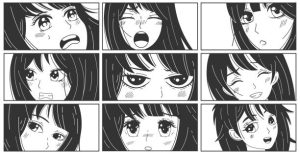
When you think about an AI anime face generator in this way – that you’re not just making a pretty face, you’re making a person’s face, and expressing the personality that is unique to that person – prompts transform. You stop thinking in terms of broad emotional descriptors and start thinking in terms of personalities. You stop judging the output by asking “is this looks good?” and judging it by asking “would this look like this character?” This is what takes bad character design into good character design. And when you have AI tools that can respond to that level of precision, the bar for non-professional illustrators has been absolutely raised.