
The Case for a Face for Your Fiction
It’s a little infuriating to tell a story when the character in your mind won’t come to life on paper. You have an idea in mind of how they look – the brightness of their eyes, how their coat hangs slightly crooked over their left shoulder, the scar only you can see. But then you start drawing on the app and your hands start to shake. It’s something all non-professional storytellers experience. It can be a distance that feels embarrassing and demeaning. So it’s no wonder that so many people are now using AI anime art generators to bridge the gap – and why my decision to make my own anime character has become a creative trend that’s not just a hobby but a vital part of the way people tell stories about themselves.
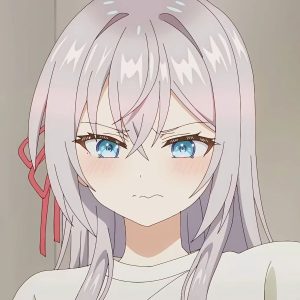
This is not about taking over the art. It’s about finally getting to sit at the proverbial table you’ve always been invited to, but haven’t had the right seat for.
You’ve Got the Character in Your Head
For most storytellers, whether they’re writing fan fiction, building a webcomic, creating a D&D campaign or just writing a journal entry, their characters are already fleshed out in detail in their imaginations. They have the picture in their minds. But they don’t have the technology to get them out. Digital artwork is a hard skill to learn. An artist is expensive and the give-and-take of working with one can diminish the tenderness of the original conception. Stock images are a bad joke. So the character remains purely verbalised, never visualised.
AI anime generators have really improved this. You write a description of what they’re like, what their mood is, the colour scheme, their physical features, the way they dress, and within a few seconds you see the start of a character. And it might not be done right the first time, but it’s iterative. You’re not waiting on anyone. You’re making changes, tweaking, trying again. That’s a part of getting to know your character.
It’s More Than Just a Pretty Picture
I’m going to ask you to consider this: when you see your character on the page for the first time, even in a sketchy way, you gain a different perspective on them. Suddenly their posture matters. You don’t want them to look defensive or insecure. You can see what they’re concealing from their face. Images create a feedback loop that just words don’t. Writers who have character art – even if it’s just a sketch – describe how it helps make their characters real, their dialogue snappy, and the emotional context for scenes more apparent.
AI anime art speed it up. You’re not having to wait weeks for a commission or months to learn software. You create an image, you look at it, you have an emotional response, you tweak the prompt, and you create another image. Some people do fifteen variations a day. What they get is more than a picture – they get a character they understand in a way they never did before.
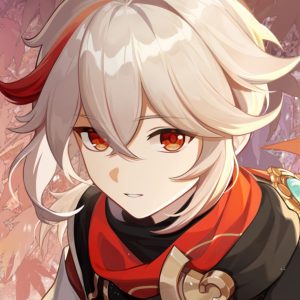
There’s a Skill to the Art of Prompting
Let’s face it: when most people are new to an AI image generator, the results are a bit of a shitshow. Too bland, a touch creepy, or just not quite right in a way that’s difficult to pinpoint. It would be easy to think it is not very good. But it’s more likely the problem is the prompt.
How to prompt for anime art is a little art itself. This is because anime art is such a wide spread of styles – from the gentle, rounded slice of life to the edgy, high contrast shonen action. Understanding what aesthetic style your character fits in, and naming it (even vaguely) makes a huge difference. Terms like light mood, emotional tone, even artist style (but not actually naming the artists, which is inappropriate) are useful. The less guessing the tool has to do, the better – and guessing is the enemy.
Consistency Is the Hard Part (And There Are Ways Around It)
One caveat: AI character images are not consistent. Unprompted, the same character can look a bit different from one generation to the next, which can be a problem for people who want to maintain a consistent appearance over time for a series or for a narrative. This is a problem, and I’d be lying if I said otherwise.
However, there are solutions. There are tools that allow you to preset seed values or styles, which pin future generations to a reference image. Certain software allows you to import a character sheet to use as a guide. Creating a written style guide for your character, with exact hex codes for hair, phrases for eye shape, adjectives for clothes details and so on, is a kind of formula you can paste into different sessions to help you reach your goal. It’s a bit more work, but it’s what professional illustrators would do. It’s just in a different medium.
When the Face Fits, Storytelling Is Personal
There’s a version of storytelling that can’t help but be abstract because the visual element is inaccessible. And then there’s the one where your character is both a word and a picture, where you can look at their face as you write about their voice, where you can point to an image and show a collaborator or reader, “This is the character you’re reading about.”
The second version is just more alive. It makes it easier to bring other people into the story. It helps firmly ground your imagination. And it makes the process of making art less like making do with what you can and more like making something new.
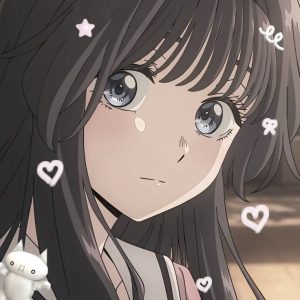
The Storyteller Is Always the One Who Matters
At the end of the day, the tool is a tool. The character is there because you want it to be. The story is compelling because you’ve made it compelling. AI art generation is now a very useful tool that didn’t exist five years ago, but it doesn’t take away from the impulse that caused you to want to create something in the first place. It just makes the technical chasm no longer the reason your idea doesn’t get off the ground.
Grab a prompt, and start writing. Describe what you see. Iterate. Look at what comes back. Feel what it’s missing. start writing. And that’s it – it’s more like drawing than you’d think.