
How AI Generators Are Reshaping the World of Visual Art
There’s a special kind of creativity block that occurs when you have an image in your head and no means to bring it to life. You know the colors. You know the mood. You can almost taste the light. And then when it comes to actually creating it you end up with something that looks like it was drawn by someone who’s only ever read about art. If that sounds all too familiar, you’re not alone – and you’re also living in the best of times for this particular issue. The AI-powered anime art generator has become one of the most valuable tools of visual storytelling, and it’s not an overstatement to say it’s a game-changer in how we think about what we can make.
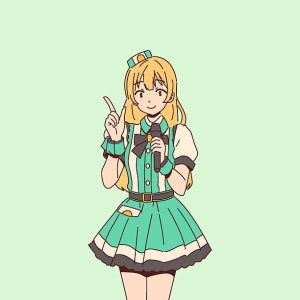
The promise sounds simple. Describe what you see. Get an image back. But what’s going on behind this is actually pretty cool.
Anime as a Style Is Particularly Well-Suited for AI
Anime has a highly codified set of conventions. The proportions, the use of color, emotional cues in facial expressions, the way light falls on hair – all of this is extremely codified, and AI models learn to do this very quickly. This is one reason AI anime art looks more deliberate than other styles of AI art. There is a rule set behind the style, and if a model has learned enough of it, it can follow the rules. This is good news for artists using these tools. You have a base in which the AI already knows how to do it in the genre that you’re working on.
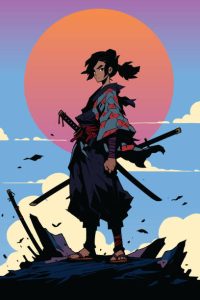
This doesn’t mean everything that you create looks the same. Anime is a genre that has a very broad range – from the gentle, almost watercolour feel of pastoral slice-of-life scenes to the stark, dynamic feel of fight sequences. The same model can give you a still life of a country train station or a stormy action sequence. It’s the prompt that changes the result.
How to Describe What You See
People tend to think that prompts aren’t as specific as they should be. The default is to be generic: “a girl with blue hair in a forest.” That works, technically. You’ll get something. But “something” and “what I wanted” are rarely the same thing, and it’s often that gap that frustrates people.
Consider a director speaking to a cinematographer prior to a shot. They don’t tell them to “make it look nice”. They talk about the lighting, the mood of the scene, the time of day, the location of the camera relative to the actor, how they want the audience to feel after watching the scene. This is how to write an AI image prompt. Atmosphere, light quality, colour temperature, the psychology of the character, how far back the shot is supposed to be, all of these things contribute to the result. More specific doesn’t necessarily mean more complex. Sometimes it’s just more true to the image in your mind.
The Loop that’s Never Spoken About
Here’s the not-so-secret part of using an anime art generator: iteration is key. We tend to try one prompt, be a bit underwhelmed it didn’t take our word for it, and decide it’s not for us. It’s a little like asking to hear a single chord on a guitar and concluding that you’re not a “music person”. The power of this tool emerges over time.
Every generation gives you information. When the results come back a bit different – the tone’s not right, the colours are too warm, the composition is too busy – that tells you something. You change one thing, then go again and see what happens. After a few rounds of four or five, you’re not only getting closer to the image. You’re getting clearer on what your image is. It’s in that loop where some of the best creative leaps happen where something unexpected from iteration takes you to a better place.
This is particularly the case for concept development. When artists and storytellers use AI anime art very early in the development process, they report seeing how the generation process can lead them to make choices they didn’t know they had to make. Certain tones evoke certain emotions. Postures convey character traits. Instead of “I need a bad guy character” I know that I “I have to make a character who looks like he’s tired of having to be bad” – a much more interesting character, and with much more interesting visuals.
Bright Doesn’t Mean Shallow
A point that needs to be made: the idea that anime-style visuals, and especially the more vibrant ones, are per se shallow or frivolous. It’s a category mistake anyone who has lived with the medium knows is false. Anime has always been deeply felt and resonant, just in bright colours. It’s part of its storytelling power that it deals with heavy themes and brightly rendered images.
AI anime art generators can definitely work in that mode. An image of a character laughing with bright colors can be more melancholic than one with grayscale if the eyes are drawn with a certain degree of detachment.
Visual Inspiration Has Changed Shape
Once upon a time, seeking visual inspiration for an idea for a creative project involved gathering reference images, printing them out, sticking them on to walls and hoping the right synthesis occurred in your mind. That process is still valid. But having an AI anime art generator at the ready means you’re also getting a different type of input – one that’s responding specifically to your ideas, as opposed to having to translate other people’s art into your own. You’re not repurposing. You’re generating from your own brief. That’s a very different place to start with creative work, and that means a different level of ownership in the final product.
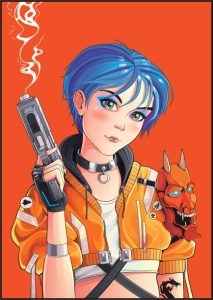
Anime is a highly communicative, flexible and emotive visual language that’s perfectly matched to storytelling. Combined with AI tools that respond to text-based prompts, it gives people who wouldn’t have had it before a degree of visual control over their creative process. visual control. That’s what’s at stake here – not the tools themselves, but the fact that they’re actually making something that was previously inaccessible accessible.