
Turning Ideas into Reality: How AI Is Changing the Game
Many of us have characters in our heads. A face they’ve seen in their dreams. A voice that’s been evolving in half-baked journal entries and notes. An image that’s never been realised outside of someone’s mind because the gap between the imagination and reality has always been a bloody gaping chasm. This gap used to be the skill of an artist, or the money for a commission, or time. Now it’s a prompt. Drawing on anime character ai as well as using AI tools has shrunk this gap in ways that would have been inconceivable 10 years ago – and the result is a different kind of creative engagement.
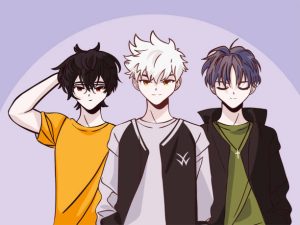
It’s important because ideas expire quickly. Brains are good at churning ideas and eventually they slip away. When we put them into a physical form, even an approximate one, they’re fixed. It gives them a level of permanence they don’t have otherwise.
Faced Characters Feel Different
If you ask anyone who has ever been given character art for a project they’re working on, they’ll tell you that it made a difference in how they wrote the character. There’s something about seeing a face, the particular shape of the jaw, the way they look at you, the way they carry themselves that doesn’t come through in words. Writers who have visual references consistently have dialogue that feels more distinct. Their characters choose different body positions in scenes. The words become more economical, in ways that are difficult to articulate but easy to sense.
AI anime art tools give you the chance to experience that with your own eyes, not just if you can afford to pay someone to draw it or can draw it yourself. You tell it what you want to see. The tool renders it. You respond to the result. And from that reaction (whether it be “that’s not quite right”) you learn something about yourself you didn’t know before. There’s a friendly tension between what you thought and what the AI did. That’s information.
What “Anime Character AI” Represents
We tend to throw the phrase around, so let’s be clear. Anime character AI is the name given to systems that are explicitly trained to create characters within the framework of anime artistic conventions – body proportions, colour schemes, emotional cues communicated through eye and body position, way light falls on different hair types, fabrics and so on. These are not image generators that just happen to generate anime-like images. They’re systems with a pretty keen knowledge of the visual dynamics of anime. This makes a huge difference to quality.
The difference between asking a general image AI for an anime-style drawing and a specialised AI for a drawing is like asking someone who’s seen a few anime series and someone who’s watched hundreds. The former gives you something plausible. The latter gives you something that feels true. The proportional grammar is correct. The emotional place of the face is correct. There are little things that you might not even be aware of, but you definitely notice if they’re not right.
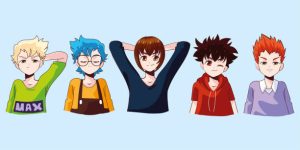
The Prompt Is Not Just Instructions – It’s Creative
Here’s an idea that took some time to register for many people: writing a prompt for an AI character generator is creative. Real creative work. It makes you describe your vision in enough detail for it to be translated, and this means you have to describe your character with greater specificity than most people do in the early stages of character development. If you can’t get close enough for the tool to generate a useful image, that’s not a problem with the tool. It means you don’t have the character completely defined.
This is actually one of the best features of anime character generators. The prompting process can be used as a test for your own idea. “She has dark hair and looks serious” is not a character. “She has a dark, longish hair that she hasn’t combed and an expression that’s not so much angry as bored, like someone who used to be passionate about something and now just isn’t” is a character. The second version produces better images. It’s also better for the story. Both are important, and both feed into a positive feedback loop that helps to refine the concept.
Stylistic Settings: Not a One-Size-Fits-All
A more freeing thing about AI anime art is the stylistic diversity. Many people talk about anime as if it’s all the same – the style they’re most familiar with, which is also the most commercially successful – but that’s like saying all books are the same because they use the same language. Anime visual styles vary from painterly to graphic, saturated to desaturated, rounded to sharp, warm to cool. All these decisions have emotional and storytelling implications.
What that means is that you can request the style that suits the story, rather than the style that you get. If you have a character in a story of an introspective, sad nature, they probably shouldn’t look like they’ve just stepped off the court in a fast-paced tournament arc – and you can bias the prompt towards that. Terms like light quality, colour temperature, line weight and mood all tend to lead to particular outcomes. It’s all about learning that language, and it comes fast.
Visual Development Feeds Written Development
Here’s the cycle to learn: visual->written->visual. It’s not a direct line. A character design that turns out unusually somber in mood might direct the story’s backstory. The image of a setting that comes out with a different architecture than you’d envisioned might tell you something about the world the story is taking place in that could lead to new possibilities. AI anime art, when used as an idea tool rather than a production tool, has a generative effect that many people don’t appreciate until they’re well into a project and realise that the visuals are making decisions that they thought were based purely on the story they were writing.
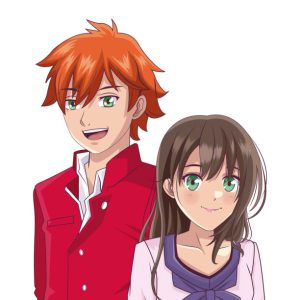
This is what visual artists have always done with reference and concept art – not simply to record the outcome of decisions already taken, but to make decisions visually. AI makes this process accessible to everyone. And “seriously” doesn’t mean hours of practice every day. It requires focus, repetition, and openness to letting the results surprise you into the right direction.