
How Creating Anime AI Characters Is a New Art Form
In the past, online self-expression meant choosing an avatar. If you were lucky, writing a bio that tried to communicate something authentic about yourself in three sentences and most likely failed. There were few ways to express who you actually were – or who you wanted to be, or who you imagined – beyond words. Words, a couple of pictures, the occasional poorly cropped self-portrait. Then things shifted. Custom anime ai characters made with anime ai characters are one of the very personal ways that people are expressing something meaningful about themselves, and there are reasons why we shouldn’t dismiss it as merely a fad.
Character is nothing new. It’s not new – we’ve always done it, in the stories we tell, the characters we identify with, the art styles we prefer. Now the technical level of effort required to visualise those characters is much lower. And that changes who gets to participate.
Anime as a Visual Mode is Good for Self-Expression
Anime is always a little weird about emotions. The language of the image is designed to communicate internal states – big, emotive eyes that express complex emotions, lighting and colour choices that establish mood, body language that’s drawn with such precision it’s often lost in realistic renderings. These aren’t quirks or flukes. They’re tools. They’re tools that are surprisingly easy to use to express yourself, because they allow you to convey an emotion without having to be photo-realistic or putting your own face on display.
That’s why we use illustrated avatars and stylised representations so often instead of photos. It’s not necessarily shyness. It’s the opportunity to better manage what you’re saying. A photo is a moment. A character captures an idea of yourself. For many people, the latter is truer.
How AI Has Made the Difference
To create an anime-style character, you used to need to be able to draw, or to be able to pay somebody to draw. Neither was just a practical constraint, it was a psychological one. If you needed to hire someone to create the thing, you were at their mercy for interpretation, style and availability. The end result was a collaboration whether you liked it or not. That’s what changed with AI anime art tools because the collaboration is now you and something that doesn’t have its own approach to creativity, its own style, its own interpretation. It just does what you say. That’s a new sort of collaboration.
The speed matters too. The iteration is quick enough that you can run a concept through ten iterations in an hour and land on something that works. You’re not waiting. You’re not budgeting. You’re simply doing, tweaking, seeing what it looks like, doing it again. That process – fast, reactive, low risk – is a great deal of the way creative work gets done. That’s how it clarifies.
Positive Expression Is Not Fuzzy
It’s easy to think that “positive digital expression” is a woolly positive-sounding phrase that means nothing. But here, it refers to something specific. Deciding how to express yourself visually, creating a character that means something rather than just happens, using creative tools to express character and interiority rather than just appearance – that’s an important choice. It affects how you engage online. It affects how others see you. And it affects how you perceive yourself in online environments, where most of us now spend a large part of our time.
An anime AI character that you design and construct – where you decide how they’re feeling, what colour they are, how they’re standing – is different to a random avatar or a stock photo. This is perceptible even if it can’t be expressed verbally. There’s intention behind the thing. Intention is readable.
The Range is Wider Than You Think
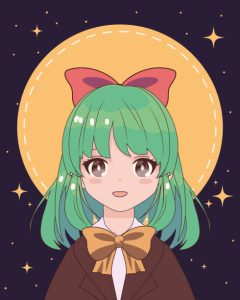
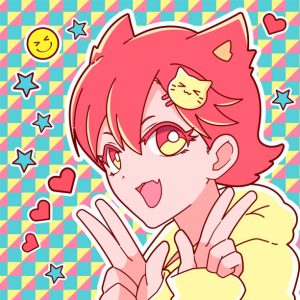
The first time people use AI tools to create anime art, they tend to think the results are more limited than they actually are. They picture a certain style (most likely the one they’re most familiar with), and assume they’ll get variations on that style. Instead, they discover there is a lot of variation. Warm and fuzzy, with round features and soft lighting that looks cuddly. Strong and contrasty, with angular features and shadows that reads as dramatic. Ghostly and evocative, with fuzzy detail and cool colors that reads as surreal. Vector and graphic, with flat areas and thick lines that reads as decisive. Each of these communicates something different. Each has a different sort of communicative purpose.
How to navigate between them is part of learning how to use these tools. It’s simple, but it does take attention – to the output, what is working and what isn’t, what descriptors are resulting in what. This takes a bit of time to learn. Most people pick it up after a few tries.
Posting What You’ve Created and Why
One of the most surprising aspects of AI anime characters is their social mobility. Post a picture of yourself and the reaction you get is informed by a whole range of things – impressions of your looks, the setting, what is included and excluded in the photo. If you present a character you’ve designed, it’s a response to the character. There’s discussion of the design decisions. They notice things you put in there. The ensuing conversation is about the ideas and not the style, and that’s a different kind of conversation than a photo usually evokes.
This is particularly the case with online creative communities, where character design is a language and speaking this language is valuable. That is, bringing something you’ve made, even if it’s by telling an AI what to draw, implies that you’re participating in a creative process. It enables opportunities that mere browsing can’t.
This doesn’t require thinking of AI tools as a substitute for human ability. They’re not, and to think of them that way misses the point. They’re a new tool that extends the ability to express visually to those who haven’t had that access before. How that access is used – how personal, how deliberate, how creative – remains in the hands of the prompter.