
Here’s Why Full-Body Character Design is Now Open to All
Full body character design has long been a “professional-only” domain. It was fine to design a portrait – a head, a bit of hair, some shoulders – but when you had to show a character from head to toe, it became more complex. Proportion, pose, garments that drape and fold like real fabric, hands (you know, the “the bane of the illustrators”), shoes that the character can stand on, it all combined to make a skill set that took years of experience to develop. There was a huge gap between “I can envision this character” and “I can draw this character”. Having a anime character maker full body using AI anime art has definitely altered that dynamic, and the freedom of imagination that comes from it can fuel a project, not just an image.
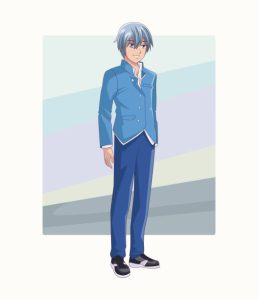
Full-body design is more important than you might think. A character’s body is part of their personality. The way they walk, what they wear, how they carry themselves, how their attitude is expressed on their face – it matters. When you can’t represent them, you lose information. When you can, it’s more specific.
The Entire Body Does More Than the Face
That’s why professional game designers and animators consider the whole body as the first canvas, and not the second. The face is for feelings, true. But posture carries attitude. Clothing carries time and place, social status, individuality, profession, attitude to self-identity. How their weight rests on their feet will tell you if they’re rooted or ready to spring. These are not small details. They add up to a whole picture of a person – or character, as the case may be for the purposes of a story.
With AI anime art that creates full characters, you have all of that. You’re not just saying “make a head”. You’re thinking about the body language; how they’re standing; how they’re dressed. The specificity of the prompt results in an image that’s more interesting than a floating head with an arm gesture. And in doing so, it makes you get to know your character.
What Full-Body Prompting Takes
There’s a progression from a pretty good portrait prompt to a strong full-body prompt. Not a huge one, but a step up. The error people tend to make is to describe the face in detail and leave the rest as “person standing there wearing clothes”. The AI will fill the blank in as blandly as you can. You need to fill in the blank to get a unique character.
Think about posture first. Looking like you are posing for a picture looks very different to leaning against something and crossing your arms. One’s the kind of person who walks through rooms and makes them readjust their configurations. The other looks like someone making a statement about the degree to which they care about the person they’re facing – and this could be “very much” or “not at all” depending on the facial expression and the context. Then clothing: not only “wears a coat” but whether it’s zipped or not, whether the collar is up or down, whether the sleeves are pushed up or not. These details create visual personality that “wearing a coat” doesn’t. Then place, even implicitly – a person in a scene has more presence than someone against a white background.
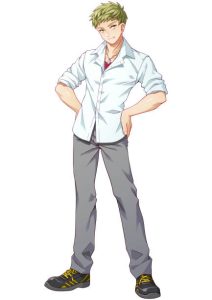
The Freedom That Comes From Seeing the Whole Figure
There’s a moment when you create a full-figure for your character. It’s a little like when you first meet someone you’ve been speaking to on the phone for a while. You know them, and then you know them. You see the proportions that were previously oblique in your mind. You see if the character looks like the personality you’ve written them as – and sometimes, good for you, you see they don’t and need to re-imagine something you’ve probably just written as finalised.
This is where the meat of the creative process can happen. A character who looked intense in a portrait might not look quite right when standing: they might be too intimidating, or not intimidating enough, or standing in a way that doesn’t match the personality you’ve been describing. It’s useful for being wrong. It points you at something. And with AI anime art tools the feedback loop is fast, so you can tweak and re-run without it getting too painful. Each iteration, the character comes into focus. By the fifth or sixth generation, you often get something that you think to yourself “that’s them” – and the moment of recognition is no small achievement.
Costume Design as Character Writing
Here’s one way that true character work differs from surface decoration: clothing design. Costume design is a highly communicative, and often overlooked, element of character work. Clothes speak to status, background, body image, taste, occupation, and also – if needed – the occasional red herring. A character wearing a suit to the gym is choosing to. A character who wears clothes that are a little too big for them has a story in their history. These choices are literally in clothing.
AI anime art full-body generation presents clothing in ways that can accommodate this. Describe layering, texture, damage. Ragged fabric looks different from new fabric. Patched garments read differently to tailored garments – and the story that each garment tells about its wearer is different. If you care about that aspect of the clothing description, you don’t just get better pictures. You also get a better idea of who your character is, which feeds back into the rest of the work.
When the Full Body, the Full Body Changes
Full-body character pieces have a social component that just isn’t there with portraits. A face is a face. A full-body figure is a person, standing in your mind’s eye, embodied in the imaginations of others. When you submit your artwork of a full-body character to a collaborator, a reader or a community of creatives, you’re presenting something much more than a portrait.
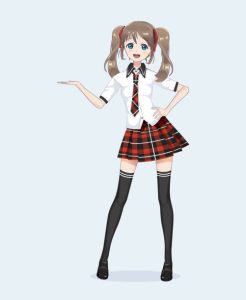
That gives them a different experience. Collaborators give more specific feedback. The audience relates to the character sooner. Creatives have more to talk about. And you, as the character’s creator, get a different experience when you get to see all the way down to the ground. There’s a wholeness to it that portraiture, however lovely, doesn’t convey. Full-body character design using AI anime art is one of the areas where practical usefulness and creative usefulness are almost perfectly aligned – and that’s something that should be exploited.